Still Becoming: The Case for Treating Your Chocolate Bar as a Living Thing
There is a particular kind of discipline required to purchase a sixty-dollar chocolate bar and then do absolutely nothing with it for three years. It runs counter to every consumer instinct, every impulse toward immediate gratification that the modern food economy has so efficiently cultivated. And yet, among a small but growing cohort of American craft chocolate makers and their most devoted admirers, that discipline is precisely what separates the enthusiast from the connoisseur.
The premise is disarmingly simple: chocolate, like wine, continues to evolve long after it leaves the hands of its maker. The bar you purchase today is not the bar you will encounter eighteen months from now, and it is certainly not the bar you might unwrap in 2028. Whether that evolution represents improvement, degradation, or something far more nuanced depends on variables that are only beginning to receive the serious scientific and culinary attention they deserve.
The Chemistry of Continuation
To understand why chocolate changes with time, one must first appreciate what a finished bar actually contains. Beyond cacao solids and cocoa butter—the fundamental building blocks—a well-made craft bar is a dense matrix of volatile aromatic compounds, polyphenols, trace acids, and crystalline fat structures, all suspended in a state of careful equilibrium at the moment of production. That equilibrium, however, is never truly static.
Oxidation is perhaps the most familiar of these ongoing processes. Cocoa butter, while more stable than many fats, is not immune to the slow absorption of atmospheric oxygen that occurs even through quality foil and paper packaging. At low levels, this oxidation does not produce rancidity so much as it gently mutes or shifts certain high-frequency floral and citrus notes—the same volatile compounds responsible for the bright, almost aggressive fruitiness that characterizes freshly produced bars from certain Peruvian and Madagascan origins. What remains, some tasters argue, is a more restrained and integrated aromatic profile, one in which secondary flavors—dried fruit, tobacco, aged leather, dark spice—are permitted to assert themselves without competition.
Crystalline restructuring is a less intuitive but equally consequential phenomenon. Cocoa butter exists in multiple crystalline forms, and the tempering process that gives a quality bar its characteristic snap and gloss is, in essence, the deliberate cultivation of Form V crystals—the most stable and desirable arrangement. Over time, particularly with minor fluctuations in storage temperature, those crystals undergo slow phase transitions. The textural consequences can be subtle or pronounced: a bar that snaps crisply at six months may develop a slightly more yielding, almost waxy resistance at three years. Whether this constitutes improvement is a matter of considerable debate, though many experienced tasters describe the mouthfeel of a properly aged bar as richer and more enveloping.
Perhaps most intriguingly, Maillard reaction byproducts—the complex flavor compounds generated during roasting—continue their slow transformations within the sealed bar environment. Certain aldehydes and pyrazines, responsible for roasted and nutty characteristics, gradually interact with residual sugars and amino acids in ways that can deepen or mellow flavor depending on the bar's specific composition.
Makers Who Design for the Long Game
In Brooklyn, a small-batch producer who sources exclusively from family-operated fermentaries in Ecuador and Honduras has begun annotating certain releases with what she calls a "development window"—a suggested range of months or years during which the bar is expected to reach what she considers peak expression. "I think about it the way a winemaker thinks about a vintage," she explains. "Some bars are ready immediately. Others have a tension in them, a brightness that needs to settle before the deeper structure reveals itself."
She is not alone in this orientation. A Portland, Oregon maker who built his reputation on high-percentage dark bars from Belize has been quietly experimenting with what he describes as intentional aging trials, producing identical bars and sealing them under controlled conditions for evaluation at six-month intervals over five years. His preliminary findings, shared with a small circle of wholesale partners and collectors, suggest that bars in the seventy-two to eighty-two percent cacao range exhibit the most interesting and positive evolution, while milk chocolate and lower-percentage bars tend to plateau or decline within eighteen months due to the dairy components' comparative instability.
A third maker, operating out of the San Francisco Bay Area, has taken the most provocative approach: she releases certain single-origin bars exclusively as "futures," available for purchase at production but packaged with explicit instructions to withhold consumption for a minimum of two years. The bars carry sealed date stamps and a tasting guide describing expected flavor trajectories. The response from her customer base has been, by her account, equally divided between fascination and bewilderment.
The Collector's Calculus
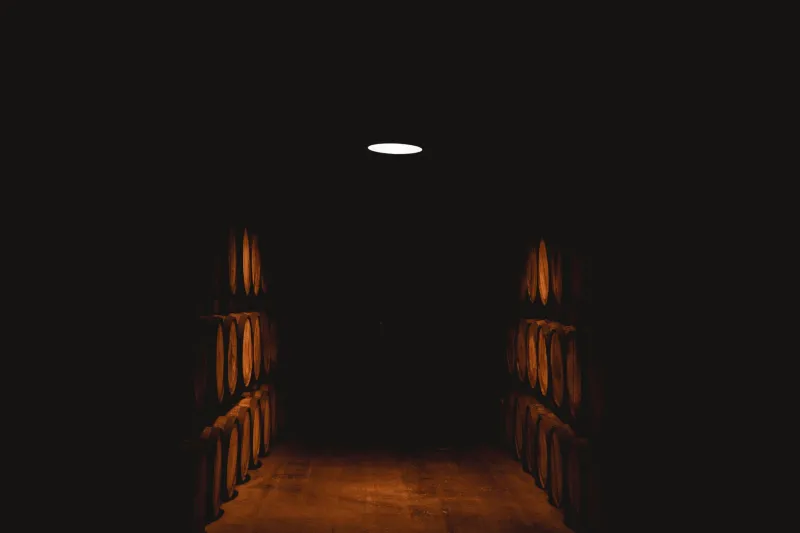
For the American chocolate enthusiast willing to entertain the concept of intentional aging, a few practical considerations demand attention. Storage conditions matter enormously. The ideal environment is cool—between fifty-five and sixty-five degrees Fahrenheit—dry, dark, and free from strong ambient odors, which can permeate packaging and influence flavor over extended periods. A dedicated corner of a temperature-stable basement or a wine refrigerator set to the lower end of its range are both workable solutions. The kitchen counter, despite its convenience, is almost never appropriate for bars intended to age beyond six months.
Packaging integrity is equally critical. Most craft bars arrive in foil-lined paper that provides reasonable short-term protection but is not engineered for multi-year storage. Collectors who take aging seriously often re-seal bars in vacuum-packed food-safe bags after purchase, preserving the original packaging within. This additional barrier against oxygen and moisture can meaningfully extend the window during which positive evolution remains possible.
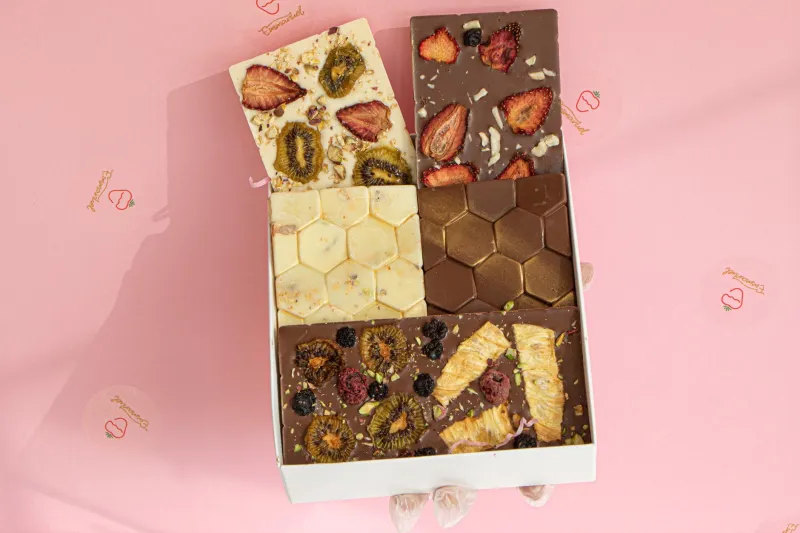
Finally, not every bar is a candidate for the cellar. High-inclusion bars—those containing nuts, dried fruit, caramel, or dairy—carry components that age poorly and should generally be consumed within the maker's recommended window. It is the unadorned, high-quality dark bar, particularly those from origins known for complex polyphenol structures and well-managed fermentation, that reward the patient collector most reliably.
A Different Relationship with Pleasure
What distinguishes the deliberate aging of chocolate from mere procrastination is intentionality—the conscious decision to defer consumption in service of a more considered, more complete experience. It is, at its core, a philosophical stance as much as a gastronomic one: an acknowledgment that the best things are rarely finished at the moment they are made, and that time, applied with care, can be as transformative an ingredient as any that enters the conche.
The American craft chocolate movement has spent the better part of two decades teaching consumers to pay attention—to origin, to fermentation, to roast, to texture. The next frontier may simply be asking them to wait.