The Fleeting Peak: How American Craft Chocolatiers Are Chasing Perfection Before It Disappears
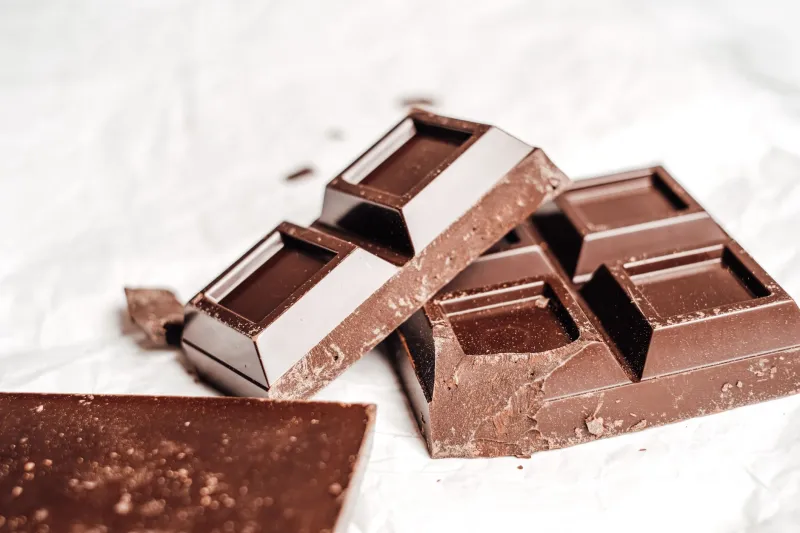
There is a moment — brief, unannounced, and easily missed — when a well-made chocolate bar becomes something more than the sum of its ingredients. The tannins have softened. The volatile acids have found equilibrium. The fat has crystallized into a structure so precise it yields to the tongue with a quiet, authoritative snap. Then, almost imperceptibly, the moment begins to pass.
Oxidation does not announce itself. It works in silence, degrading aromatic compounds, dulling brightness, and flattening the layered complexity that a skilled chocolatier spent months coaxing from raw cacao. For American craft producers who have invested enormous care into sourcing, fermentation, and roasting, the cruel irony is that time — the very element that refines a bar — eventually becomes its undoing.
This tension between ripening and decay has quietly become one of the defining preoccupations of the American micro-chocolate movement.
The Chemistry of the Window
To understand why the peak exists, one must first understand what is happening inside a finished bar. Chocolate is not a static object. Even after tempering and molding, it remains a site of ongoing chemical activity. Polyphenols continue to interact with proteins. Residual moisture migrates. Volatile flavor compounds — the esters, aldehydes, and pyrazines responsible for everything from stone-fruit brightness to deep roasted earthiness — remain in a state of flux.
During the early weeks after production, many of these compounds settle into a more harmonious arrangement. Chocolatiers frequently describe this phase using the language of wine: the bar is "opening up." Astringency recedes. Fruit notes that were sharp at molding round into something more generous. A bar that tasted angular and unresolved at day three may be luminous by week six.
But this trajectory has a ceiling. Once oxygen has sufficient access — through microscopic imperfections in packaging, through repeated temperature fluctuations, through the simple passage of time — the same aromatic compounds that created complexity begin to degrade. The result is what tasters describe as "cardboard" or "flat" — a blunted, one-dimensional experience that bears little resemblance to the bar's earlier potential.
"Most people eat chocolate either too soon or too late," observes one Pacific Northwest micro-roaster who has spent the better part of a decade mapping flavor trajectories across different cacao origins. "The window varies enormously by origin, by roast, by conche time. There is no universal answer. You have to taste your way to it."
Mapping the Curve: Unconventional Approaches to Aging
A small cohort of American producers has begun treating post-production aging with the same methodical attention they apply to fermentation and roasting. The approaches vary considerably, which is itself instructive — there is, as yet, no consensus protocol, only a growing body of maker-specific knowledge.
One Brooklyn-based chocolatier has developed what she describes as a "tasting grid" — a structured evaluation framework applied to sample bars pulled from each production run at weekly intervals. Every session is documented with tasting notes, humidity readings, and storage temperature logs. The resulting data, accumulated over several years, has allowed her to construct origin-specific aging curves that inform both her release schedule and her guidance to wholesale accounts.
"A high-acid Nicaraguan I work with regularly peaks somewhere between eight and eleven weeks post-production," she explains. "A lower-acid Peruvian from the same harvest might not fully open until week fourteen. If a retailer puts either one on the shelf the day it arrives, they are selling the bar before it has become what it is meant to be."
In contrast, a Colorado producer takes a more intuitive approach, relying on sensory evaluation rather than data logging. Having roasted and tasted the same Bolivian origin for several consecutive harvests, he has developed what he describes as an almost physical sense of where a given bar sits on its trajectory. "You start to recognize the texture of the brightness when it is at its best — there is a kind of lift to it that is difficult to articulate but unmistakable once you have tasted it enough times."
Both approaches, though methodologically distinct, share a common commitment: the belief that releasing chocolate at its peak is as much an ethical obligation as a commercial one.
Packaging as Preservation
For producers who have gone to the trouble of identifying the peak, the next challenge is protecting it. Packaging decisions that once seemed primarily aesthetic have taken on new significance in this context.
High-barrier foil laminates, nitrogen flushing, and vacuum-sealed inner wrappers are increasingly common among producers who take oxidation seriously. Some have moved away from windowed packaging entirely, sacrificing the visual appeal of a visible bar in favor of the oxygen exclusion that an opaque, fully sealed wrapper provides.
The tradeoff is not trivial. In a retail environment where visual presentation drives impulse purchases, asking a consumer to trust the contents of an opaque package requires a degree of brand credibility that takes years to establish. Yet several producers report that their most loyal customers — those who understand what they are purchasing — actively prefer the fully sealed format, precisely because it signals that the maker has prioritized flavor over merchandising.
Teaching Consumers to Taste the Moment
Perhaps the most significant challenge facing this movement is not technical but educational. A consumer who does not know that a peak exists cannot be expected to seek it out, mourn its passing, or hold a producer accountable for releasing bars before it has arrived.
Some American makers have begun addressing this gap directly. Tasting notes that reference optimal consumption windows — rather than simply listing flavor descriptors — are appearing on an increasing number of labels. A handful of producers have introduced what might be called "aging guidance" on their websites: origin-specific recommendations for when to open a bar, and how long it can be expected to hold its peak under ideal storage conditions.
One Chicago-based chocolatier has gone further, hosting what she calls "timeline tastings" — structured events at which participants taste the same bar at three different points in its aging curve. The experience, she reports, is consistently revelatory for attendees accustomed to consuming chocolate without temporal context. "When someone tastes the same bar at week two, week eight, and week sixteen, and understands what they are experiencing, they never approach chocolate the same way again."
This is, ultimately, the aspiration that animates the broader effort: not merely to produce chocolate of exceptional quality, but to cultivate an audience capable of recognizing — and demanding — that quality at its most transient and therefore most precious.
The Connoisseur's Obligation
For the discerning enthusiast, the implications are both demanding and deeply rewarding. To engage with craft chocolate at this level is to accept that the bar in one's hand is not a fixed object but a moment in a process — one that has already begun and will, eventually, conclude. Buying from a producer who understands this dynamic, storing the bar with appropriate care, and tasting it with deliberate attention at the right interval transforms the act of eating chocolate into something closer to connoisseurship in its fullest sense.
The terroir of time, as some in this community have taken to calling it, is no less real than the terroir of soil or climate. It is simply less visible — and therefore more easily ignored. Those who have learned to attend to it report that it changes everything.