The Provenance Paradox: How Single-Origin Dogma Is Leaving American Craft Chocolate's Best Work Untold
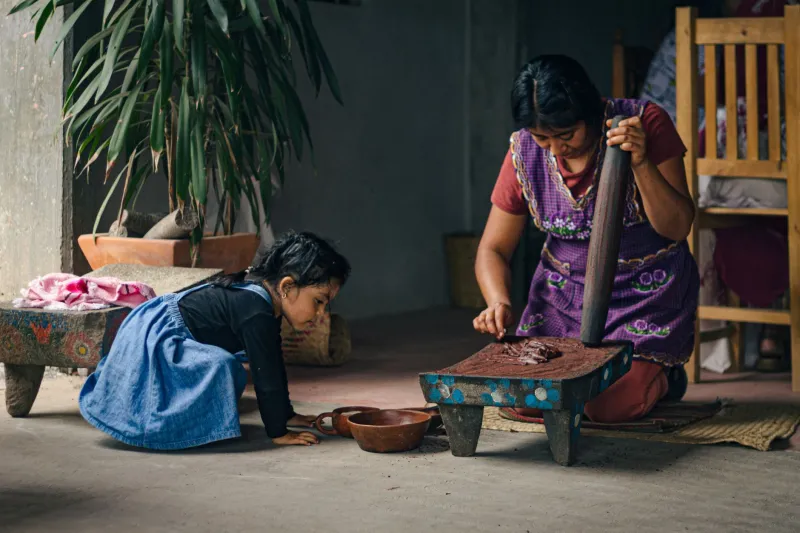
There is a particular kind of reverence that has settled over the American craft chocolate conversation—one that treats the name of a Peruvian valley or a Madagascan cooperative as the final word on quality. Walk through any specialty food market from Portland to Brooklyn, and you will encounter bars adorned with topographic maps, harvest years, and farmer portraits. The message is consistent: provenance is everything.
But what if that message, however well-intentioned, is quietly strangling the most exciting work happening in American chocolate today?
When the Map Became the Menu
The single-origin movement arrived in American chocolate roughly two decades ago, borrowing its intellectual framework from specialty coffee and fine wine. The logic was sound at the time: in an industry dominated by commodity cacao and anonymous blends engineered purely for sweetness, naming a place of origin was a radical act. It forced consumers to consider that chocolate had a geography, that flavor was shaped by soil and climate and the hands of farmers whose labor had long gone unacknowledged.
This was, without question, a necessary correction. The transparency it introduced gave discerning consumers a new vocabulary and a legitimate reason to pay more for a two-ounce bar than they might spend on an entire box of conventional confections.
Yet somewhere along the way, provenance transformed from a useful lens into an ideological requirement. Origin became synonymous with quality. The bar without a named estate began to feel lesser—a product of compromise rather than intention. And in that conflation, something important was lost.
The Maker Disappears
Consider what the single-origin framework actually measures. It documents where cacao was grown. It says almost nothing about what happened afterward.
The distance between a harvested cacao pod and a finished chocolate bar is enormous, and every step along that journey—fermentation protocols, drying conditions, sorting decisions, roast profiles, conche duration, tempering curves—represents a discrete creative and technical choice made by the maker. These choices are not incidental. They are, in many cases, the primary determinants of what ends up on your palate.
A lightly roasted, minimally conched Ecuadorian bar from one American workshop will taste fundamentally different from a bar made with cacao from the same cooperative by a maker who applies a longer roast and an extended conche. The origin is identical. The chocolate is not. Yet the marketing language of the industry consistently elevates the former variable—the farm—while rendering the latter—the maker's hand—nearly invisible.
This is not merely an academic concern. It shapes purchasing behavior, critical discourse, and ultimately the economic incentives that determine which approaches to chocolate-making receive investment and recognition.
What Blending Actually Requires
The case for blending is not new. It is, in fact, ancient. The great chocolate traditions of Europe—particularly in Switzerland, Belgium, and France—were built on the art of combining cacaos from multiple origins to achieve a complexity and consistency that no single bean could reliably provide. A master blender working with cacaos from West Africa, Central America, and Southeast Asia was not cutting corners. They were practicing a discipline as demanding as any in the culinary arts.
American craft producers who have returned to this tradition are doing something genuinely difficult. They are managing flavor relationships across origins with different acidity profiles, fat contents, and aromatic compounds. They are making decisions about proportion and sequence that require both technical fluency and sensory sophistication. They are, in the fullest sense, composing.
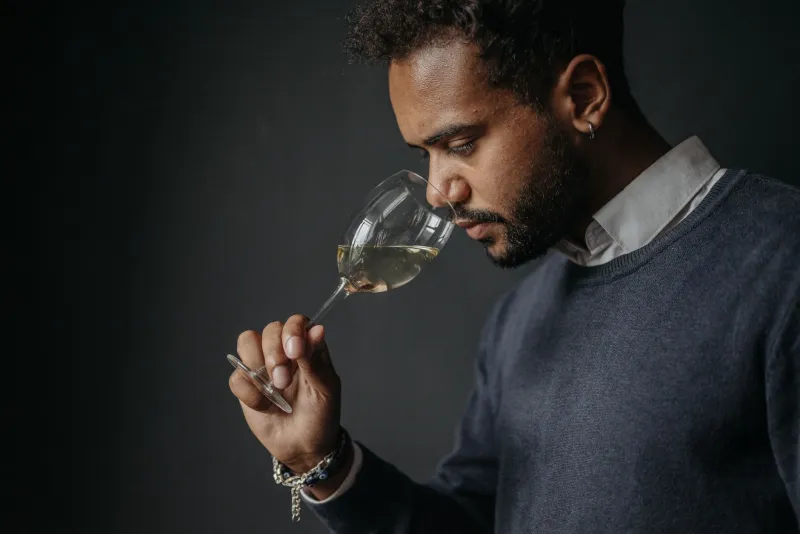
The wine analogy is instructive here. No serious wine culture treats a Bordeaux blend as inferior to a single-varietal bottling simply because multiple grapes are involved. The blend is understood to be a different kind of achievement—one that prizes harmony, depth, and the maker's interpretive intelligence over the raw expression of a single terroir. Champagne, perhaps the most celebrated sparkling wine in the world, is almost entirely a blending art.
Why has chocolate been so resistant to the same understanding?
The Sensory Case Against Purity
There is also a straightforward argument to be made from the palate itself. Single-origin bars, by their nature, tend toward a particular flavor profile that reflects the dominant characteristics of their source cacao. This can be extraordinary—a well-made Haitian bar with its notes of dried cherry and earth, or a Venezuelan cacao expressing the floral elegance for which it is justly celebrated, can be among the most arresting eating experiences a chocolate lover will encounter.
But these experiences are, in a meaningful sense, narrow. They are designed to showcase a single voice. And that voice, however beautiful, does not always tell the whole story of what chocolate can be.
Blended bars, when executed with genuine craft, offer a different kind of pleasure. They can sustain a longer tasting arc, moving from initial brightness through mid-palate complexity into a finish that evolves rather than simply fades. They can balance the tannic austerity of one origin against the fruited roundness of another, creating a structural tension that keeps the taster engaged in a way that a more monolithic profile cannot.
This is not a lesser experience. For many palates—and many occasions—it is a richer one.
Toward a More Complete Conversation
None of this is an argument against single-origin chocolate. The transparency that the movement has brought to cacao sourcing has been genuinely valuable, both for consumers and for farming communities whose livelihoods depend on premium pricing. Origin matters. It simply does not matter exclusively.
What the American craft chocolate world stands to gain from a more expansive conversation is a fuller appreciation of the maker's role—not as a conduit for translating a farm's raw material into a bar, but as an author with a distinct creative voice and a set of technical skills that deserve their own critical language.
The most compelling American chocolatiers working today are not simply sourcing well. They are thinking deeply about process, composition, and the sensory experience they want to create. Some of them are doing their most interesting work with blends that would be invisible under the current hierarchy of value.
To taste that work with clear eyes—unclouded by the prestige of an estate name or the romance of a coordinates label—is to encounter American craft chocolate at its most honest and most ambitious. It is, to borrow the spirit of this publication's own appetite for the extraordinary, the experience of letting the thing itself speak, rather than the story told about it.
That, ultimately, is what the connoisseur's palate demands.