When the Season Changes, So Does Your Palate: The Temporal Dimension of Craft Chocolate
Americans have grown accustomed to thinking about craft chocolate through a decidedly geographical lens. Single-origin bars arrive with tasting notes referencing distant hillsides, specific harvest cooperatives, and elevation profiles measured to the meter. It is a framework that rewards curiosity and flatters the connoisseur. Yet there exists a variable that nearly every enthusiast overlooks entirely — one that operates not across oceans, but across months. That variable is time, and more precisely, the season in which a bar is unwrapped and consumed.
The idea that climate shapes flavor is hardly novel. Wine aficionados have long spoken of how a Burgundy reveals different facets in winter candlelight than it does on a summer terrace. Cheese professionals acknowledge that a cave-aged wheel tastes differently when the air outside is cold and dry than when summer humidity presses against the walls. Craft chocolate, for all its sophistication, has been curiously resistant to this conversation.
The Physiology of Seasonal Tasting
Before considering how chocolatiers might respond to seasonal shifts, it is worth understanding what actually changes in the taster. Human olfactory function — which accounts for the overwhelming majority of what we perceive as flavor — is meaningfully influenced by ambient temperature and humidity. In the drier, colder months that define much of the continental United States from November through March, nasal passages tend toward reduced moisture, which can subtly diminish the volatility of aromatic compounds. Simply put, certain top notes that sing in warmer conditions may recede during winter, causing the same bar to present as denser, more anchored in its base tones.
Conversely, summer heat and elevated humidity accelerate the release of volatile aromatics. A bar formulated around delicate floral or fruity high notes — common in lighter-roasted Madagascan or Peruvian single-origins — may bloom almost excessively in August, its brightness tipping toward sharpness on the palate. The very same bar, opened in January, might present as composed and contemplative, its fruit notes softened, its earthier undertones more prominent.
This is not a deficiency in either the chocolate or the taster. It is, rather, an invitation to approach the craft bar as a dynamic object — one whose expression is partly authored by the atmospheric conditions surrounding its consumption.
Barometric Pressure and the Body's Response
Less discussed, though increasingly examined in sensory science, is the role of barometric pressure in taste perception. Research into how pressure fluctuations affect gustatory sensitivity suggests that falling pressure — the kind that precedes storm systems common across the Midwest and Northeast — may temporarily heighten sensitivity to bitterness and reduce sweetness perception. For a bar hovering near the boundary between pleasant astringency and outright bitterness, the difference between a clear October afternoon and a gray November morning could be the difference between a transcendent tasting and a disappointing one.
Artisanal producers who have spent years calibrating the precise roast level, conche duration, and sugar ratio of a particular expression rarely account for the fact that barometric conditions on the day of consumption may shift the sensory balance they worked so carefully to achieve. This is not a criticism — it is an acknowledgment of complexity that the broader craft community has yet to fully embrace.
Should Chocolatiers Be Thinking in Seasons?
The logical extension of this inquiry leads to a provocative question: ought American craft chocolatiers develop seasonally distinct formulations, much as certain chefs adjust their menus not merely for ingredient availability but for how seasonal conditions affect the diner's sensory state?
A handful of producers operating at the vanguard of American artisanal chocolate have begun, quietly, to move in this direction. Winter releases that lean into roasted depth, cocoa mass richness, and warming spice integration speak to a palate that is physiologically primed to receive them. Summer expressions that emphasize bright acidity, lighter roast profiles, and pronounced fruit fermentation notes capitalize on conditions that amplify those very qualities.
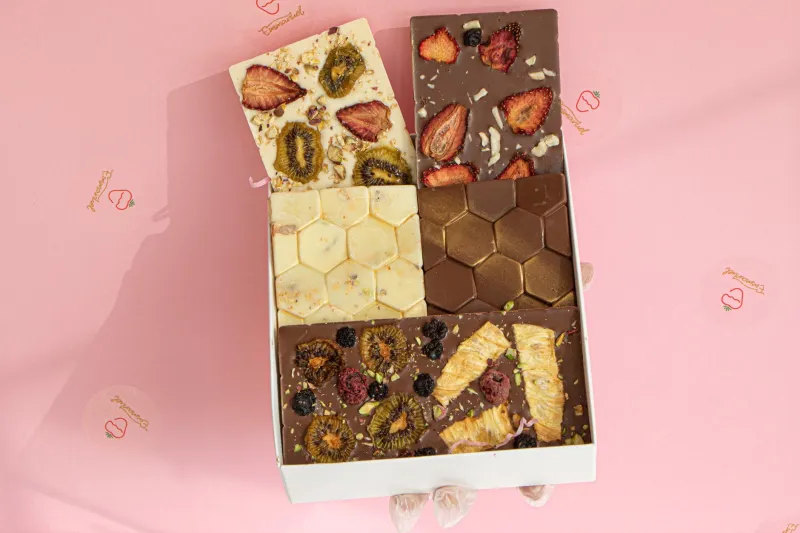
This is not mere marketing seasonality — the chocolate-covered strawberry heart for February, the pumpkin spice inclusion for October. That approach treats season as backdrop. What is being proposed here is something more fundamental: treating season as a formulation variable, one that influences the ratio of sweetness to bitterness, the choice of roast profile, the decision to include or omit a particular origin entirely.
The American Connoisseur's Blind Spot
Why has this conversation remained so marginal in American craft chocolate culture? Part of the answer lies in the dominance of the origin narrative. The story of a cacao farmer in the Ecuadorian highlands, the specificity of a post-harvest fermentation protocol, the romance of a single estate — these are compelling, tangible, and photogenic. Temporal terroir offers none of those visual or narrative conveniences. It is invisible, atmospheric, and demands that the enthusiast turn attention inward rather than outward toward a distant origin.
There is also the matter of how craft chocolate is typically purchased in the United States. Unlike wine, which is often selected with a specific occasion or season in mind, the craft bar tends to be bought on impulse — at a specialty grocer, a museum shop, or through a curated subscription service. The act of deliberate seasonal pairing, of asking oneself whether this particular expression is suited to the atmospheric conditions of this particular week, requires a degree of intentionality that the current retail environment does not encourage.
Practical Guidance for the Discerning Enthusiast
For those inclined to experiment, the entry point is simpler than it might appear. Begin by noting the ambient conditions at the time of tasting — not obsessively, but with genuine curiosity. A bar that disappoints in July may reward revisitation in December. A winter purchase that seems muted and flat may, in warmer months, reveal a vibrancy that was always latent within it.
Beyond personal experimentation, consider engaging with producers who release limited seasonal expressions. A growing number of American craft chocolate makers, particularly those operating in regions with pronounced seasonal variation — New England, the Pacific Northwest, the upper Midwest — have begun to articulate seasonal intention in their tasting notes, even if they have not yet fully theorized it.
Finally, resist the impulse to evaluate a bar definitively on a single encounter. The craft chocolate bar, like any genuinely complex confection, is a conversation that unfolds across multiple tastings, across shifting moods and conditions and seasons.
A Richer Framework for Appreciation
The terroir conversation in American craft chocolate has produced genuine sophistication. Consumers who once reached for commodity bars now speak fluently about fermentation profiles and post-harvest processing. That is a meaningful evolution. But sophistication, by its nature, does not stand still.
Adding temporal awareness to the connoisseur's framework does not diminish the importance of geographical origin — it enriches it. The cacao from a particular valley in the Dominican Republic does not taste the same in all seasons, in all climates, to all bodies in all physiological states. Acknowledging that variability is not an admission of uncertainty. It is, rather, the mark of a palate that has matured beyond the seduction of fixed answers into the more rewarding territory of genuine inquiry.