A Bar in Motion: The Quiet Transformation Unfolding Inside Every Piece of Craft Chocolate
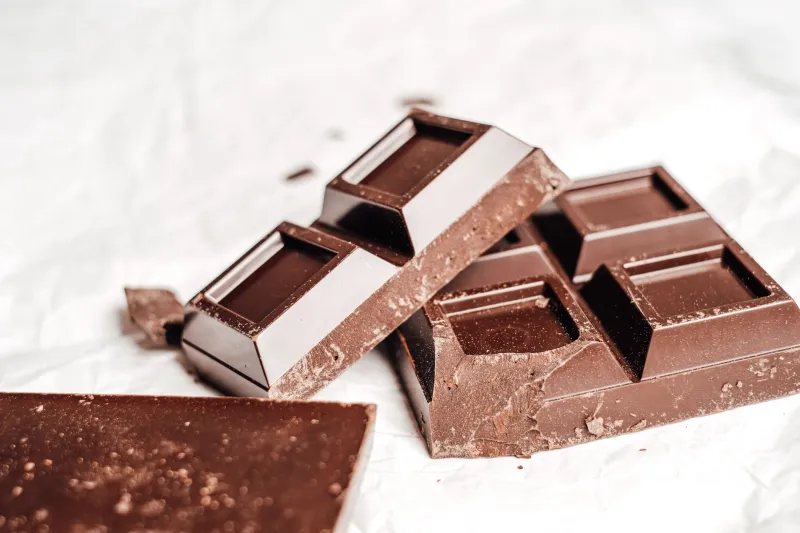
There is a particular kind of disappointment familiar to devoted chocolate enthusiasts: the bar purchased at a specialty shop, set aside for a special occasion, and finally unwrapped only to taste somehow flatter, more muted, less alive than anticipated. The temptation is to blame storage—a warm kitchen, a poorly sealed wrapper, proximity to something aromatic. But the more unsettling possibility is that the bar has simply moved through time, and time, in the world of craft chocolate, is never neutral.
Chocolate is not a static medium. From the moment a bar is demolded and wrapped, it enters a continuous state of low-level chemical activity. Volatile aromatic compounds migrate and dissipate. Cocoa butter fractions shift within the crystalline structure. Moisture equilibrates with the surrounding environment. These are not dramatic changes visible to the naked eye, but they accumulate—and for a food as compositionally complex as fine chocolate, even modest molecular drift can produce meaningful sensory consequences.
The Chemistry of Passage
At the most fundamental level, what we perceive as chocolate's flavor is a layered interaction between hundreds of volatile and non-volatile compounds. The roasting and conching processes that define a maker's style are designed to coax certain of these compounds forward while suppressing others. But that careful calibration does not freeze in place upon tempering. It continues to evolve.
Among the most consequential of these ongoing processes is oxidation. Unsaturated fatty acids present in cocoa butter are susceptible to oxidative degradation over time, particularly when exposed to light or oxygen. The result, in its early and subtle stages, is not the rancidity associated with spoiled food but rather a softening of the brighter, more volatile aromatic notes—the fruit-forward or floral qualities that often distinguish a high-quality bar at the moment of its making. What lingers as those top notes recede tends to be the deeper, earthier, sometimes more bitter base flavors.
Simultaneously, Maillard reaction products formed during roasting—the same class of compounds responsible for the complex flavors in roasted coffee or seared meat—continue their own slow transformations. Some of these compounds polymerize or degrade over time, subtly reshaping the flavor architecture the chocolatier worked to establish. The result is a bar that, months after production, may taste technically sound but experientially different from what left the workshop.
Designed to Peak, or Designed to Last?
Most American craft chocolatiers operate with shelf-life windows of twelve to twenty-four months, a range that reflects food safety considerations and retail practicality rather than any deliberate philosophy about when a bar tastes best. This is not a criticism—it is simply a reflection of an industry that has not yet fully reckoned with the temporal dimension of its product.
A handful of makers, however, are beginning to think differently. Some have started considering what might be called a "flavor arc"—the idea that a bar does not have a single intended experience but rather a trajectory, with a discernible opening phase, a period of peak expression, and a gradual decline into something less vivid. Designing for that arc, rather than for a static moment, represents a genuinely different approach to formulation.
For instance, a bar with pronounced bright acidity and delicate floral notes might be at its most expressive within the first four to eight weeks after production, before oxidation begins to mute those volatile compounds. A darker, more robustly roasted bar, by contrast, might actually benefit from a few months of rest, during which some of the sharper, more astringent notes from roasting soften into something more integrated and harmonious. These are not hypothetical distinctions—they are observable differences that attentive tasters regularly encounter.
The Consumer's Unwitting Role
What makes this dimension of chocolate particularly interesting—and, for the connoisseur, particularly consequential—is that the consumer participates in it without necessarily knowing so. A bar purchased from an online retailer and shipped across the country arrives having already traveled some distance along its flavor arc. A bar discovered at the back of a pantry shelf may have completed a journey its maker never anticipated.
In neither case is the chocolate necessarily diminished in any absolute sense. But it is different. And consuming it without awareness of where it sits in its lifecycle means consuming it without full context—like reading the final chapter of a novel without knowing the story that preceded it.
Some enthusiasts have begun approaching this more deliberately, purchasing multiple bars of the same production lot and tasting them at intervals over several months. What they consistently report is that the experience is not simply one of degradation but of genuine transformation—a revelation of different facets of the same underlying material. The bar that tasted bright and assertive at week two may taste more contemplative and complex at month four. Neither experience is wrong. They are simply different chapters.
Toward a More Intentional Relationship with Time
For chocolatiers who take the long view, this raises practical questions that the industry has not yet standardized. Should bars carry not just expiration dates but suggested consumption windows? Should makers communicate openly about the flavor arc they designed for—or discovered—in a given bar? Should retailers who specialize in craft chocolate be curating by production date with the same attentiveness that a fine wine shop applies to vintage?
These are not frivolous questions. They reflect a deeper truth about what distinguishes artisanal chocolate from its commodity counterpart: the acknowledgment that the making does not end at the wrapper. It continues in the hands of the person who carries the bar home, in the drawer where it rests, in the weeks that pass before it is finally opened.
The finest craft chocolate bars produced in American workshops today are, in this sense, more like living documents than finished objects. They carry within them not just the decisions of a maker but the imprint of every environment they have passed through, every day that has elapsed since their creation. To engage with them seriously is to engage with that history—and to recognize that the moment of consumption is not a conclusion but simply one point along a much longer continuum.
For the discerning enthusiast, that is not a complication. It is an invitation.