The Annotated Bar: How American Craft Chocolatiers Are Building a Science of Sensory Memory
There is a particular kind of discipline required to set something aside and wait. Winemakers understand this. So do the distillers aging bourbon in rickhouses across Kentucky. Now, a quiet but deliberate movement within American craft chocolate is applying the same philosophy to the cacao bar—not simply as a romantic gesture toward patience, but as a structured, documented inquiry into how flavor lives, shifts, and occasionally surprises.
The result is an emerging body of practice that some within the industry are calling flavor archaeology: the systematic revisitation of individual bars at defined intervals, accompanied by meticulous tasting notes, environmental records, and in some cases, multi-year sensory journals that track a single production lot from its first week out of the mold through years of quiet transformation.
From Snapshot to Chronicle
For most consumers, a chocolate bar represents a fixed moment—a finished object purchased, unwrapped, and consumed. The notion that the same bar tasted six months later might present an entirely different sensory argument is, for many, genuinely surprising. Yet this is precisely what practitioners of longitudinal tasting documentation are finding.
The shift in thinking is significant. Rather than treating the production date as a terminus—the point at which a chocolatier's work concludes—these makers are beginning to regard it as a starting line. The bar that leaves the workshop is not complete; it is, in the language of one Vermont-based maker who maintains a dedicated aging cellar, "a hypothesis waiting to be tested by time."
What the documentation reveals varies considerably by origin, cacao percentage, and processing approach. A bar built around Madagascan beans, with their characteristic brightness and red-fruit volatility, may soften its acidity over eight to twelve months while allowing secondary notes—dried cherry, a whisper of tobacco—to surface with greater clarity. A Peruvian bar, earthier and more reticent at release, might spend its first year shedding a certain roughness before arriving at something considerably more composed. These are not hypothetical observations; they are the kinds of findings that appear, with increasing frequency, in the tasting journals that dedicated producers are now maintaining.
The Architecture of a Sensory Journal
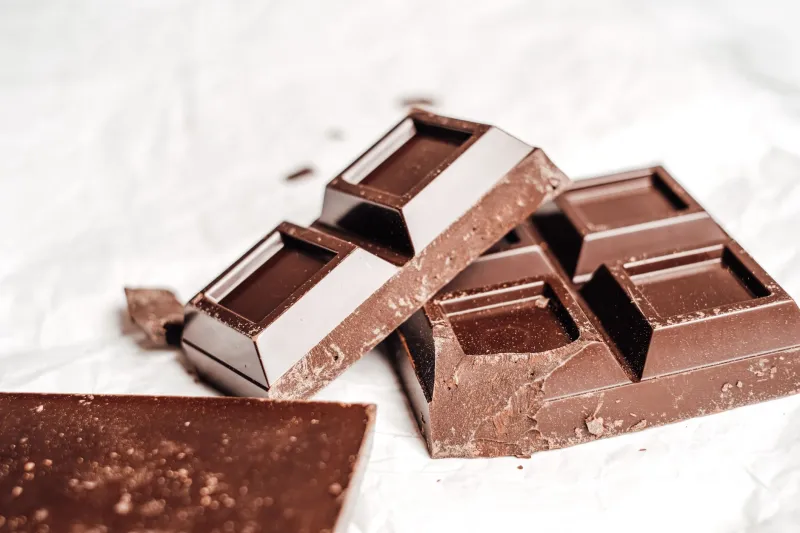
What does rigorous flavor documentation actually look like in practice? The most methodical approaches borrow liberally from wine and spirits evaluation. Producers establish baseline tasting notes at release—typically within the first two weeks—and then return to the same lot at intervals of thirty, sixty, and ninety days, followed by semi-annual assessments thereafter. Each session records not only flavor descriptors but also textural data: snap quality, melt rate, surface bloom if present, and any visible or tactile changes to the bar's structure.
Environmental conditions are logged alongside sensory observations, because temperature fluctuation and humidity are not passive variables. A bar stored at sixty-five degrees Fahrenheit in low humidity will evolve differently than one subjected to the seasonal swings of an unconditioned space. Some makers photograph each bar at every tasting interval, creating a visual record that complements the written notes.
The vocabulary employed in these journals draws from multiple traditions. Wine's established lexicon of fruit, earth, and mineral descriptors proves useful, but chocolate's complexity demands additional registers—the language of roasted goods, of dried spice, of fermentation, of the particular sweetness that belongs to cooked fruit rather than fresh. Several producers have developed house glossaries, shared internally, that standardize how their teams describe specific sensory phenomena. This is not pedantry; it is the foundation of reliable data.
Vintage Collections and the Connoisseur's Cellar
For the most committed practitioners, documentation has given rise to something more structured still: the vintage collection. Modeled loosely on the wine cellar, these are curated archives of production lots held back specifically for longitudinal study and, in some cases, eventual sale to collectors who value the aged expression over the fresh one.
The American market for aged chocolate remains nascent, but the appetite is real. A small number of specialty retailers on both coasts have begun offering "library releases"—bars pulled from producer archives after one, two, or three years of controlled storage—alongside tasting notes that trace the bar's documented evolution. The price premium attached to these releases reflects not merely scarcity but the accumulated time and attention that flavor documentation requires.
For the consumer willing to engage on these terms, the experience is genuinely revelatory. Tasting a bar at release and then again from the same lot twelve months later is not simply an exercise in comparison; it is an encounter with the idea that chocolate, like any complex fermented and roasted agricultural product, contains more than any single moment can disclose.
What Time Reveals That Process Cannot
There is a philosophical dimension to this practice that extends beyond technique. The act of documentation implies a belief that chocolate's full expression is not available at any single point—that the bar withholds certain truths until it is ready to offer them. This is a meaningful departure from the prevailing culture of immediacy that shapes most food consumption in the United States.
It also raises productive questions about the relationship between maker and material. If a chocolatier's work continues to develop long after it leaves the workshop, who is responsible for that development? The answer, most serious producers would argue, lies in the quality of the decisions made upstream: the fermentation protocol, the roast profile, the conching duration, the formulation. Time does not improve poor chocolate; it reveals the consequences of every choice made along the way. A well-crafted bar offered the right conditions will reward patience. A compromised one will simply become more transparently so.
This is, in its own way, a rigorous accountability. The sensory journal does not flatter. It records what is actually present, month after month, without editorial softening.
An Invitation to Slow Attention
For the devoted enthusiast, the implications of this movement are both practical and philosophical. It suggests that building even a modest personal archive—setting aside two or three bars from a favored producer and returning to them at intervals—can yield an understanding of chocolate that no single tasting, however attentive, can provide.
It also suggests that the most meaningful relationship with craft chocolate is not transactional but cumulative. The bar is not simply consumed; it is accompanied, observed, and, in the best cases, understood more fully over time.
In this sense, the chocolatiers who are building sensory journals and vintage collections are not merely advancing a production technique. They are proposing a different kind of attention—one that treats the confection as a subject worthy of sustained inquiry rather than immediate satisfaction. For those willing to accept that invitation, the rewards are considerable, and they arrive, as the best things do, slowly.