The Dedicated Chamber: How Serious Chocolate Enthusiasts Are Designing Spaces That Transform Storage Into Ceremony
For most Americans, chocolate lives wherever it lands—a kitchen drawer, a bedside table, or the back corner of a cabinet shared with batteries and rubber bands. For a growing number of craft chocolate devotees, however, that casualness represents a fundamental misunderstanding of what they are keeping. To these collectors, a bar of single-origin chocolate is not a snack. It is a perishable artifact, and it deserves a home that reflects that distinction.
The result is a quiet but deliberate design movement: the custom chocolate storage environment. Call it a hutch, a cabinet, a cellar, or a chamber—the name matters less than the intention behind it. These are spaces built not merely to protect chocolate from heat and humidity, but to transform the act of retrieval into something closer to ritual.
The Problem With Improvisation
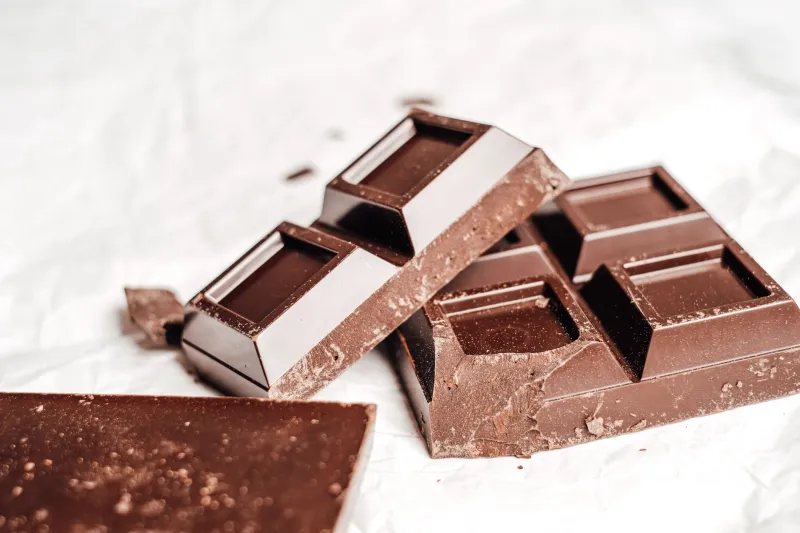
Craft chocolate is, by its nature, a fragile medium. The volatile aromatic compounds responsible for the most nuanced flavor notes—the red fruit acidity of a Madagascan Criollo, the tobacco depth of a Peruvian Nacional—are sensitive to temperature fluctuation, light exposure, and ambient odor. Most household environments subject chocolate to all three with indifference.
The standard recommendation for storage is simple: a cool, dark, dry location, ideally between 60 and 68 degrees Fahrenheit, with relative humidity below 55 percent. In practice, American homes rarely sustain those conditions consistently. Kitchens cycle through temperature extremes. Refrigerators introduce moisture and foreign aromas. The result, for the serious enthusiast, is an ongoing act of compromise—until, increasingly, it isn't.
What began as a practical problem has, for a subset of collectors, become a design opportunity. The chocolate hutch—a term used loosely to describe any dedicated, climate-conscious storage solution—has emerged as both a functional tool and a statement of intent.
Architecture as Philosophy
The form these chambers take varies considerably. At the more accessible end, enthusiasts are adapting wine refrigerators and cigar humidors, calibrating temperature and humidity settings to suit chocolate's specific requirements. A quality wine cooler, set to the low sixties and stripped of its wine racks, can accommodate dozens of bars in conditions that most pantries could never sustain.
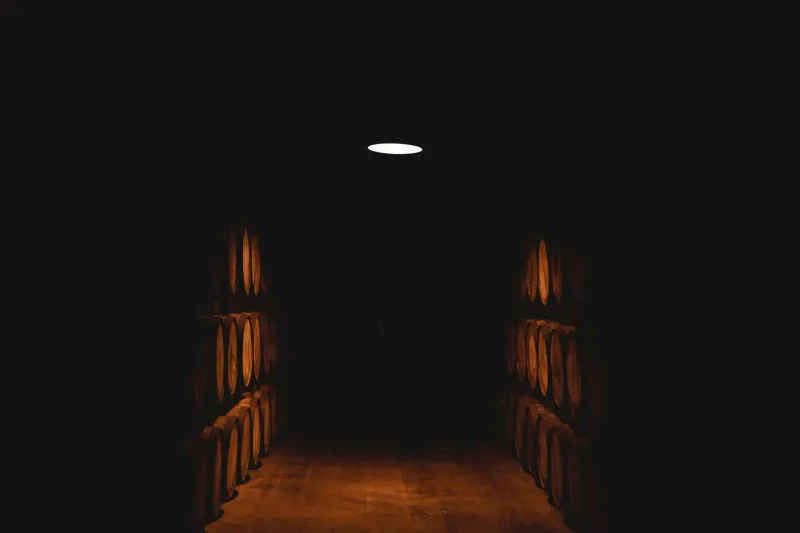
At the more elaborate end, a small number of American collectors and artisanal producers have commissioned fully bespoke solutions. These range from temperature-controlled wooden cabinets with cedar or mahogany interiors—chosen for their neutral aromatic profiles—to glass-fronted display cases that allow a collection to be admired without being disturbed. Some incorporate hygrometers and digital monitoring systems that track environmental conditions in real time. A few have been integrated into home renovation projects as deliberately as a wine cellar or a walk-in pantry.
What unites these solutions is the underlying conviction that chocolate deserves the same infrastructural consideration that wine, spirits, and fine cheese have long received. That conviction is not incidental. It reflects a broader shift in how serious American food enthusiasts understand craft chocolate's place in the hierarchy of artisanal products.
The Ritual Dimension
Storage, in this context, is not merely preservation. It is preparation. The act of opening a dedicated chocolate chamber—selecting a bar from an organized collection, noting the producer, the harvest year if applicable, the origin and varietal—introduces a deliberateness that changes the tasting experience before the first square is broken.
This is not an unfamiliar idea to connoisseurs of other disciplines. The wine collector who descends to a temperature-controlled cellar, chooses a bottle with care, and allows it to rest before opening is engaged in exactly this kind of preparatory ritual. The effect is psychological as much as physical: the deliberate act of selection primes the palate and the attention in ways that casual retrieval from a kitchen drawer does not.
Several American artisanal producers have begun acknowledging this dimension explicitly. Some now include storage guidance not as a footnote but as a central element of their packaging and consumer education materials. A few have gone further, offering collectors' sets packaged in archival boxes designed to function as short-term storage vessels, with humidity-buffering inserts and temperature-sensitive indicators.
What the Makers Are Building
On the production side, the dedicated storage environment has taken on additional significance. For chocolatiers who age their bars—allowing time and controlled conditions to develop flavor complexity in the manner of fine cheese or cured charcuterie—the storage chamber is as essential as any piece of equipment on the production floor.
Small-batch American producers working with vintage cacao or experimenting with extended conching and resting periods have invested accordingly. Some maintain climate-controlled rooms within their workshops where finished bars rest before release, monitored with the same attention they give to fermentation and roasting. The philosophy here is that the bar is not complete when it leaves the mold; it continues to develop, and the environment in which it develops is part of the craft.
For the consumer who wishes to continue that process at home—to cellar a bar for months and observe its evolution—the dedicated storage chamber becomes a direct extension of the maker's work. It is, in this sense, a collaborative act between producer and enthusiast.
Collecting as Curation
The most devoted practitioners of this approach treat their chocolate collections with the organizational rigor of a library or a wine cellar. Bars are catalogued by producer, origin, harvest date, and cacao percentage. Tasting notes are kept. Bars are compared across intervals to track how flavors shift with time and condition.
This level of engagement may seem excessive to the uninitiated. To those who practice it, it is simply the logical extension of taking the product seriously. If craft chocolate is genuinely a complex, terroir-driven, time-sensitive artisanal product—and the best of it is—then treating it as such requires infrastructure. The dedicated chamber is that infrastructure made tangible.
It is also, not incidentally, beautiful. A well-organized collection of craft chocolate bars, displayed behind glass or arranged by region and producer, is a visual testament to the breadth and diversity of American artisanal production. It is a map of taste, rendered in foil and paper, waiting to be explored one careful square at a time.