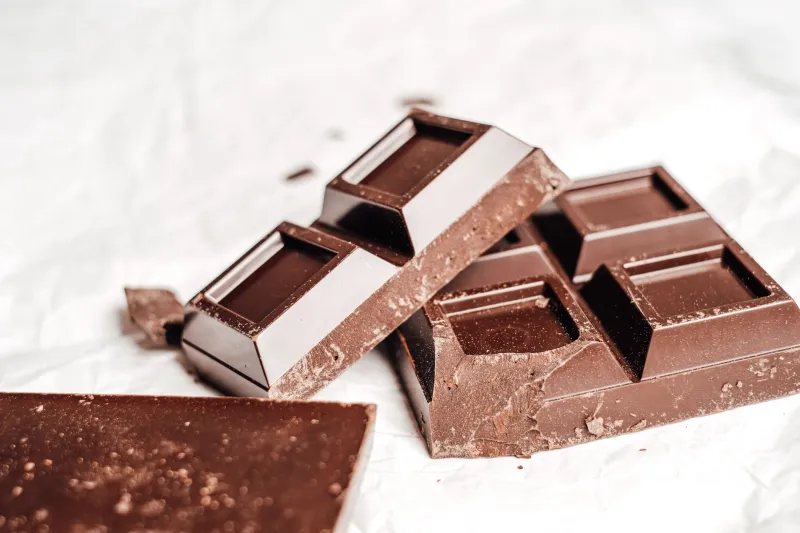
The Geography of Your Palate: How Science Is Redefining the Way We Experience Craft Chocolate

The idea that two people eating the same piece of chocolate are having the same experience has always been a convenient simplification. Sensory scientists have long understood that flavor perception is irreducibly personal—shaped by genetics, environment, and the invisible biochemistry of each individual's oral anatomy. What is only now becoming clear, through increasingly sophisticated biometric research, is precisely how dramatic those differences are, and what they might mean for the craft chocolate makers who are paying attention.
The Tongue Is Not a Uniform Surface
Begin with the most visible variable: tongue topography. The density and distribution of fungiform papillae—the mushroom-shaped structures that house taste receptor cells—varies considerably from person to person. Individuals classified as supertasters, a category first described by geneticist Linda Bartoshuk at Yale, possess a significantly higher density of these papillae and experience taste stimuli with measurably greater intensity. For such individuals, the bitterness of a high-percentage dark chocolate can be genuinely overwhelming rather than merely pronounced.
At the other end of the spectrum, non-tasters perceive the same stimuli with considerably less acuity, often finding high-cacao bars approachably mild where others find them challenging. The majority of the population falls somewhere between these poles, though the distribution is uneven and the implications for chocolate preference are substantial.
For chocolatiers who have long puzzled over why their most carefully calibrated bars provoke such divergent responses from otherwise sophisticated tasters, this framework offers a partial explanation. The bar has not failed. The palates simply inhabit different sensory registers.
Saliva as a Flavor Modifier
Beyond the physical architecture of the tongue lies a more dynamic variable: salivary chemistry. Saliva is not merely a lubricant. It is an active biochemical environment, populated by enzymes—most notably amylase—that begin breaking down food compounds before they ever reach the taste receptors. The concentration and activity level of these enzymes varies significantly between individuals and is influenced by factors including diet, hydration, time of day, and oral microbiome composition.
For chocolate specifically, salivary chemistry affects the rate at which cocoa butter emulsifies in the mouth, the speed at which aromatic compounds volatilize and reach the olfactory epithelium, and the degree to which certain polyphenols bind to proteins in the saliva, modulating their perceived astringency. A bar that dissolves into a long, layered finish for one taster may feel comparatively abrupt and one-dimensional for another—not because of any difference in attention or expertise, but because of the differing biochemical environments in which the chocolate is being processed.
Researchers at several American food science programs have begun mapping these salivary profiles with greater granularity, identifying enzyme ratios that correlate with specific flavor preferences. The data is preliminary but directionally consistent: individual salivary chemistry is a significant and largely unacknowledged variable in chocolate perception.
The Oral Microbiome's Quiet Influence
Perhaps the most frontier-facing dimension of this research involves the oral microbiome—the community of microorganisms resident in the mouth, throat, and gum tissue. This community, which varies considerably in its composition from person to person, metabolizes certain food compounds in ways that produce secondary aromatic molecules. These molecules, generated in real time during the act of eating, contribute to the retronasal aroma experience—the flavors perceived through the back of the throat as food is consumed and swallowed.
In practical terms, this means that two individuals eating the same piece of chocolate may, through the activity of their respective oral microbiomes, generate meaningfully different aromatic profiles from identical source material. The chocolate is the same. The experience is not.
This finding has begun to attract the attention of chocolatiers who have invested heavily in precise flavor development. If the final stage of flavor creation occurs inside the taster's own biology, then the bar as designed is only part of the story—a kind of template that each individual completes according to their own physiological grammar.
Designing for the Mouth, Zone by Zone
A small but intellectually ambitious group of American craft chocolatiers has begun incorporating this research into their product development process. Rather than designing a bar for an idealized universal palate, these makers are thinking carefully about where in the mouth specific flavor and texture events should unfold—and engineering their bars accordingly.
The front of the mouth, where the bar first contacts the tongue, is most sensitive to sweetness and initial aromatic impression. The middle palate, where the chocolate spends most of its melt time, carries the primary flavor development. The finish, perceived at the back of the throat and through retronasal olfaction, is where complexity and persistence are evaluated. Each zone has distinct receptor populations and distinct sensitivities, and thoughtful manipulation of the bar's physical structure can influence which flavors are expressed where.
Inclusion placement is one tool. A fine salt crystal positioned at the surface of a bar will dissolve at first contact, delivering its mineral counterpoint precisely at the front-palate stage, before sweetness and fat dominate. A piece of candied citrus peel embedded deeper within the bar will release its aromatic compounds later in the melt, contributing to mid-palate complexity. These are not accidental decisions among the most sophisticated makers; they are deliberate interventions in the tasting sequence.
Mapping Your Own Sensitivity
For the engaged chocolate enthusiast, this science offers a practical invitation: to approach one's own palate with the same curiosity that one might bring to the bar itself. A few structured exercises can begin to reveal the contours of individual sensitivity.
Tasting the same bar at different times of day—early morning, when salivary enzyme activity is typically lower, versus mid-afternoon, when hydration and enzymatic function are generally at their peak—often produces noticeably different impressions of sweetness, bitterness, and aromatic intensity. Tasting after a brief period of hydration versus in a drier oral state similarly illuminates how moisture levels affect the melt and release of aromatic compounds.
Paying attention to where in the mouth flavors seem to emerge most vividly—and where they seem to flatten or disappear—can reveal something about the specific topography of one's own taste receptor distribution. These observations, accumulated over time, constitute a personal sensory profile: a map of the geography of one's own palate.
The finest craft chocolate has always rewarded this kind of attention. The science now offers a language for what attentive tasters have long intuited: that the experience of chocolate is, in the most literal sense, one's own.