Slow Alchemy: What Happens When Chocolatiers Stop Rushing the Finish Line
There is a prevailing assumption embedded in the very packaging of most chocolate bars: consume soon, consume fresh, consume now. Best-by dates stamped on foil wrappers reinforce the idea that chocolate is a perishable indulgence, its prime a brief window to be seized before quality begins its inevitable retreat. A small but serious contingent of American craft chocolatiers has begun to challenge this assumption with considerable rigor — and with bars that simply did not exist six months prior, at least not in the form in which they are now presented.
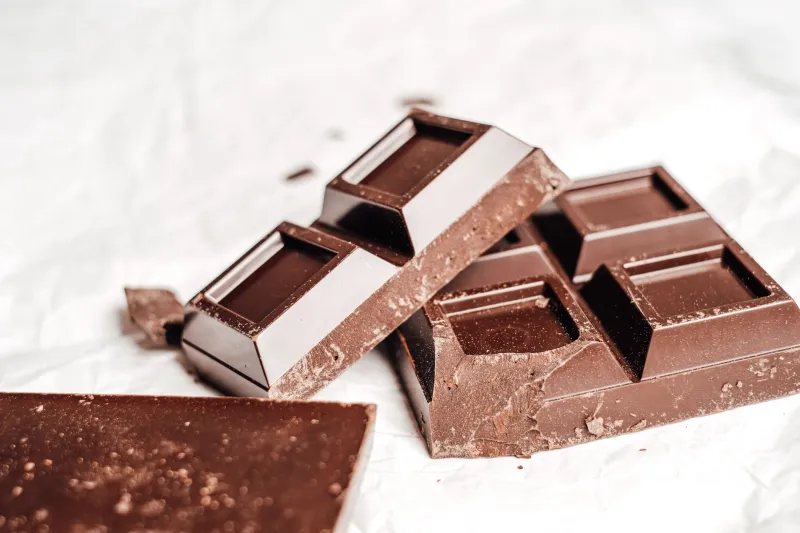
What these makers are practicing is sometimes called intentional aging, sometimes cellaring, and occasionally, with a touch of theatrical precision, vintage chocolate production. Whatever the nomenclature, the discipline is the same: finished chocolate bars, selected for specific structural and flavor characteristics, are stored under carefully governed conditions and left largely undisturbed for extended periods — months at minimum, years in the most ambitious programs. The results, when conditions are properly maintained, suggest that chocolate's relationship with time is far more nuanced than the industry has historically acknowledged.
The Chemistry of Patience
To understand why aging works at all, one must first appreciate that a finished chocolate bar is not a static object. Its flavor compounds — volatile aromatic molecules, organic acids, polyphenols, residual sugars, and fatty acid chains — remain in a state of slow, ongoing interaction long after the bar has left the conche and been poured into its mold.
Among the most consequential of these processes is the gradual oxidation of certain polyphenolic compounds. In fresh chocolate, particularly high-percentage dark bars, these compounds often manifest as sharp, astringent, or aggressively bitter notes. Given time and controlled exposure to trace oxygen — not enough to cause rancidity, but sufficient to facilitate molecular rearrangement — those same compounds can soften into something more complex: dried fruit, leather, subtle earthiness, the kind of resonant depth that lingers well past the moment of swallowing.
Simultaneously, the crystalline structure of cocoa butter undergoes a slow stabilization. Properly tempered chocolate that has been stored at consistent, cool temperatures develops what some makers describe as a more unified mouthfeel over time — the fat matrix becomes more coherent, the melt longer and more deliberate. This textural evolution is not merely incidental; it shapes how flavor compounds are released and how long they persist on the palate.
Organic acids, present in varying concentrations depending on fermentation protocols and roast profiles, also shift. Acetic acid — the compound responsible for sharp, vinegar-adjacent notes in poorly fermented or over-acidic bars — can diminish with age, allowing underlying fruit esters and floral compounds to assert themselves more clearly. The bar that arrived at the palate as bracing and angular may, eighteen months later, present as rounded and contemplative.
What the Cellar Demands
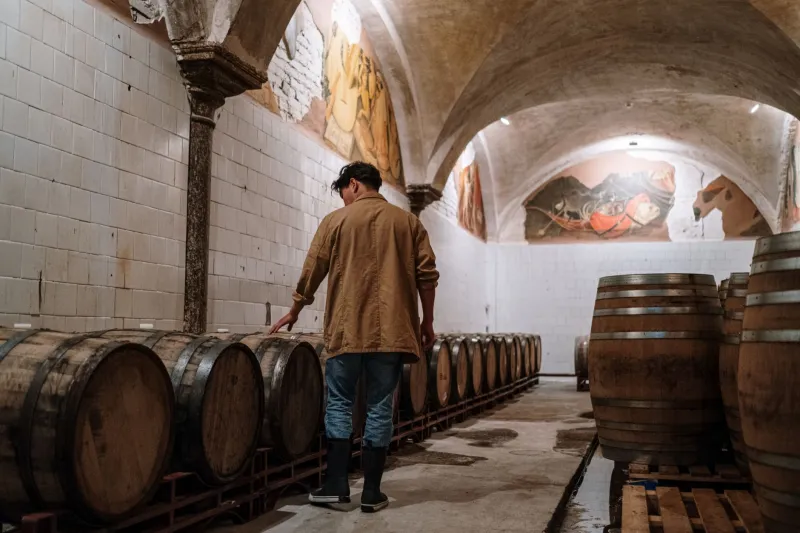
Practitioners of intentional aging are quick to note that time alone is not the operative variable. Conditions matter enormously. Temperature consistency is paramount: fluctuation causes cocoa butter to cycle through partial melt and resolidification, disrupting crystal structure and inviting bloom — the grayish, matte surface discoloration that, while not harmful, signals structural compromise. Most serious aging programs target a range between 60 and 65 degrees Fahrenheit, maintained with the same care a sommelier would apply to a temperature-controlled wine cellar.
Humidity is the second critical axis. Too much moisture invites sugar bloom and, in extreme cases, microbial activity. Too little, in some storage environments, can affect the foil or paper wrapping that serves as the bar's first line of defense against aromatic contamination. Chocolatiers running formal aging programs typically target relative humidity between 50 and 65 percent, monitored with dedicated instrumentation rather than approximated by feel.
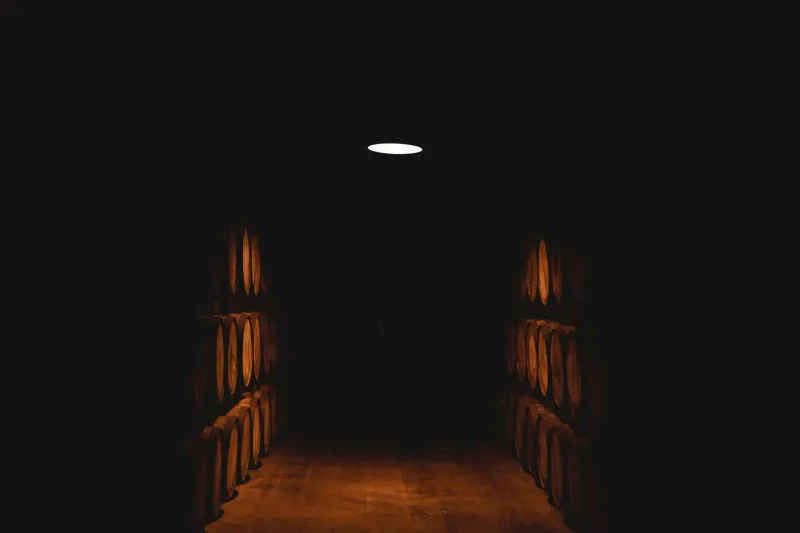
Light exclusion rounds out the triad of essential conditions. Ultraviolet exposure accelerates oxidative degradation in ways that are difficult to reverse, stripping volatile aromatics and dulling the very flavor complexity that aging is meant to cultivate. Bars destined for extended cellaring are typically stored in darkness, often in custom wooden cases or sealed archival boxes that also buffer against ambient odor absorption — a genuine concern, given chocolate's extraordinary capacity to absorb surrounding aromas.
Which Bars Repay the Wait
Not every chocolate bar is a candidate for intentional aging, and experienced practitioners are candid about this distinction. Bars that tend to reward extended cellaring share a set of common characteristics: high cacao percentages (typically 70 percent and above), minimal added ingredients, robust fermentation in the underlying cacao, and a structural density that suggests sufficient fat and solid mass to support slow transformation without desiccation.
Milk chocolate, by contrast, presents complications. The dairy solids introduced during production are far more susceptible to oxidative degradation over time, and the resulting flavor changes are rarely desirable. White chocolate, composed primarily of cocoa butter, sugar, and milk solids, is similarly ill-suited to long-term cellaring for comparable reasons.
Within the dark chocolate category, bars produced from naturally fruit-forward cacao origins — Madagascan, Peruvian, and certain Ecuadorian varieties among them — tend to evolve with particular elegance. The fruit compounds present in these origins appear to undergo a kind of concentrating effect over time, deepening from fresh and bright into something more dried and resonant, not unlike the transformation that occurs between a young Beaujolais and a properly cellared Burgundy.
Bars with high tannin structures, which can present as aggressively astringent in youth, are also strong candidates. The same tannin compounds that make a bar difficult to appreciate at release can, given twelve to twenty-four months of careful storage, soften into a structural backbone that supports rather than overwhelms.
A Practice for the Home Enthusiast
For those inclined to explore intentional aging outside of a professional context, the barriers to entry are lower than they might appear. A dedicated wine refrigerator, set to approximately 62 degrees Fahrenheit and positioned away from kitchen heat sources, provides a workable analog to a professional cellar. Humidity can be managed with a small hygrometer and, if necessary, a compact humidification device designed for cigar storage — a community that has grappled with analogous preservation challenges for considerably longer than the chocolate world.
The bars themselves should be sourced from makers whose production transparency allows for some confidence in fermentation quality and ingredient integrity. Bars from established American craft producers — those publishing detailed origin and process notes — offer a reasonable starting point. Purchasing two or three identical bars and tasting one immediately while cellaring the others provides the most direct method of tracking transformation over time.
Detailed tasting notes at each interval, however informal, prove invaluable. Flavor memory is a notoriously unreliable instrument, and the difference between a bar at six months and the same bar at eighteen months can be subtle enough to escape recollection without written reference.
Time as Ingredient
What the intentional aging movement ultimately argues is that chocolate, like the finest expressions of wine, aged spirits, and artisan cheese, contains within itself a potential that release-date consumption simply cannot access. The chocolatier who commits to a multi-year cellaring program is not merely preserving a bar; they are adding an ingredient — one measured not in grams or percentages, but in months and years of disciplined restraint.
For the connoisseur willing to exercise that restraint, the reward is a flavor experience that no amount of sourcing, roasting, or conching could have produced on its own. Time, it turns out, is among the most sophisticated tools available to the craft chocolate maker — and among the most underutilized.